
In the realm of literature, few names evoke the mysterious and atmospheric world of Gothic fiction like that of Ann Radcliffe. Born on July 9, 1764, in Holborn, London, Radcliffe went on to become one of the most influential writers of her time. Through her evocative prose and skillful storytelling, she captured the imagination of readers and established herself as a pioneer in the genre. Let us delve into the life and works of this remarkable author, whose contributions continue to shape literature even today.
Radcliffe’s literary journey began with the publication of her first novel, “The Castles of Athlin and Dunbayne” in 1789. However, it was her subsequent works that catapulted her into literary stardom. Radcliffe’s novels were characterized by their vivid descriptions of sublime landscapes, intricate narratives, and a strong emphasis on the supernatural and the mysterious. Her ability to create an eerie and suspenseful atmosphere captivated readers and set her apart as a leading figure in Gothic fiction.
One of Radcliffe’s most renowned works is “The Mysteries of Udolpho,” published in 1794. Set against the backdrop of the picturesque landscapes of Southern France and Italy, the novel follows the life of the virtuous and innocent Emily St. Aubert. Radcliffe skillfully weaves together elements of romance, suspense, and the supernatural, keeping readers on the edge of their seats as they unravel the secrets of the foreboding Castle Udolpho. With its intricate plot and rich descriptions, “The Mysteries of Udolpho” became a sensation and firmly established Radcliffe as a master of the Gothic genre.
Radcliffe’s other notable works include “A Sicilian Romance” (1790) and “The Italian” (1797), both of which further showcased her talent for crafting gripping narratives and atmospheric settings. Her novels often featured strong-willed heroines, exploring themes of female agency and the challenges they faced within societal constraints.
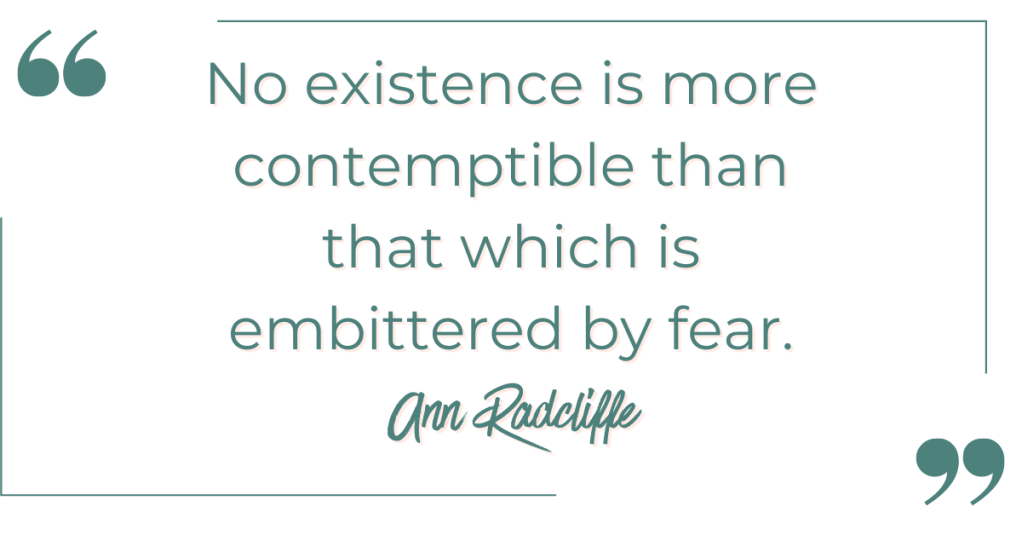
One of the striking aspects of Radcliffe’s writing is her ability to imbue her works with a sense of terror and suspense while never fully delving into the supernatural. She skillfully employs psychological suspense and ambiguity to create an atmosphere of fear and uncertainty. Radcliffe’s focus on the power of imagination and the psychological impact of fear would have a lasting influence on the Gothic genre, inspiring future authors to explore similar themes.
Radcliffe’s success as a writer also opened doors for other women in the field, challenging the prevailing notion that writing was solely a male domain. Her popularity paved the way for a new generation of female authors, including Mary Shelley and Charlotte Brontë, who would go on to make their own significant contributions to literature.
While Radcliffe’s fame and influence were undeniable during her lifetime, her literary career was relatively short-lived. After the publication of “The Italian,” she retired from writing, leaving her audience yearning for more of her enchanting tales. She lived a private life, and details about her later years are scarce. Ann Radcliffe passed away on February 7, 1823, leaving behind a remarkable legacy that continues to resonate with readers and inspire writers to this day.
Through her groundbreaking works, Ann Radcliffe redefined the Gothic genre, introducing elements of suspense, mystery, and psychological terror that would go on to shape the literary landscape for generations. Her ability to evoke emotions and create a sense of awe through her vivid descriptions of landscapes remains unparalleled. Radcliffe’s impact on literature is a testament to the enduring power of storytelling and the ability of authors to transport readers to captivating worlds filled with intrigue and imagination. As we celebrate her life and works, we honor a true pioneer of Gothic fiction whose legacy continues to cast its spell on readers worldwide.


 “Women are the real architects of society.”
Leave a reply to Writergurlny Cancel reply